
synkora-ai
Open-source AI agent platform for building, deploying, and managing AI teammates. Role-based agents (PM, Engineer, Support, Marketing) with custom tools, knowledge bases, and 50+ integrations. Self-hosted on your infrastructure.
Ficha actualizada 23 sept 2026, 16:10 · upstream 23 sept 2026, 16:02 · release v1.17.24
Qué es synkora-ai
Descripción editorial construida a partir del repositorio, su documentación y sus señales de mantenimiento.
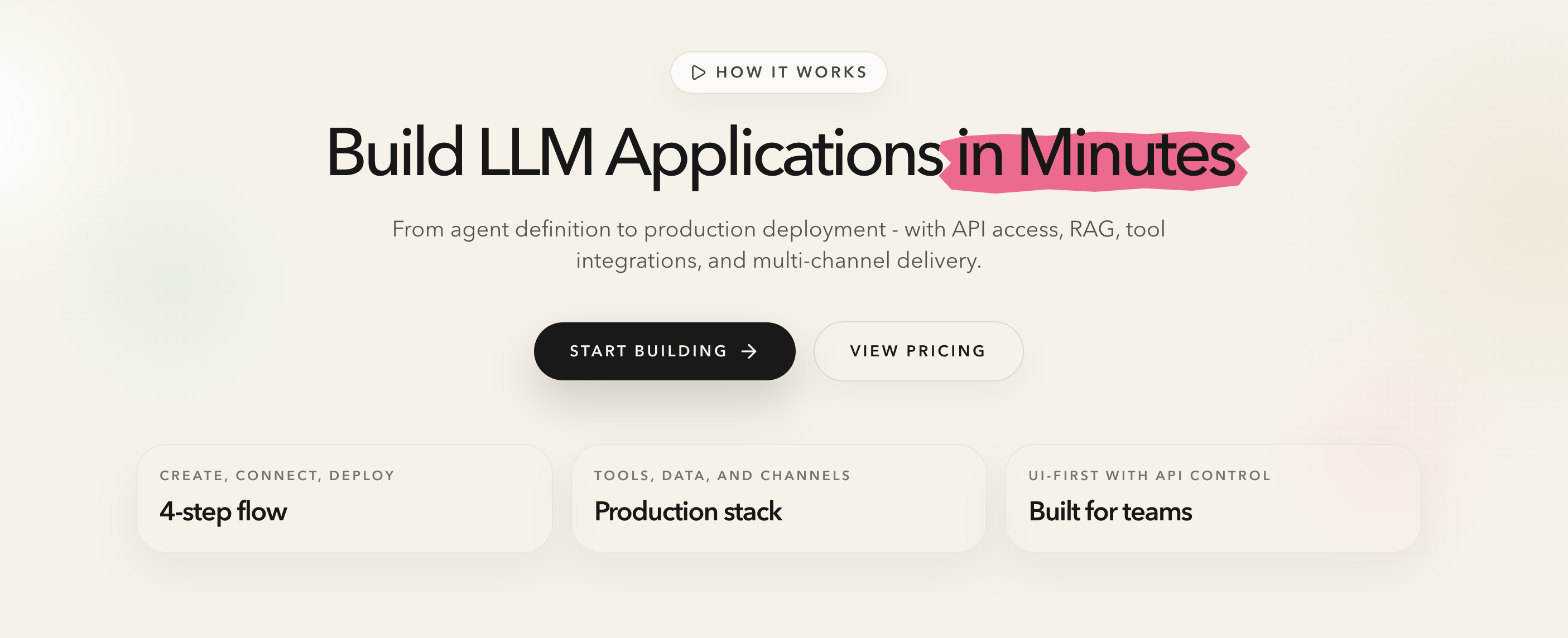
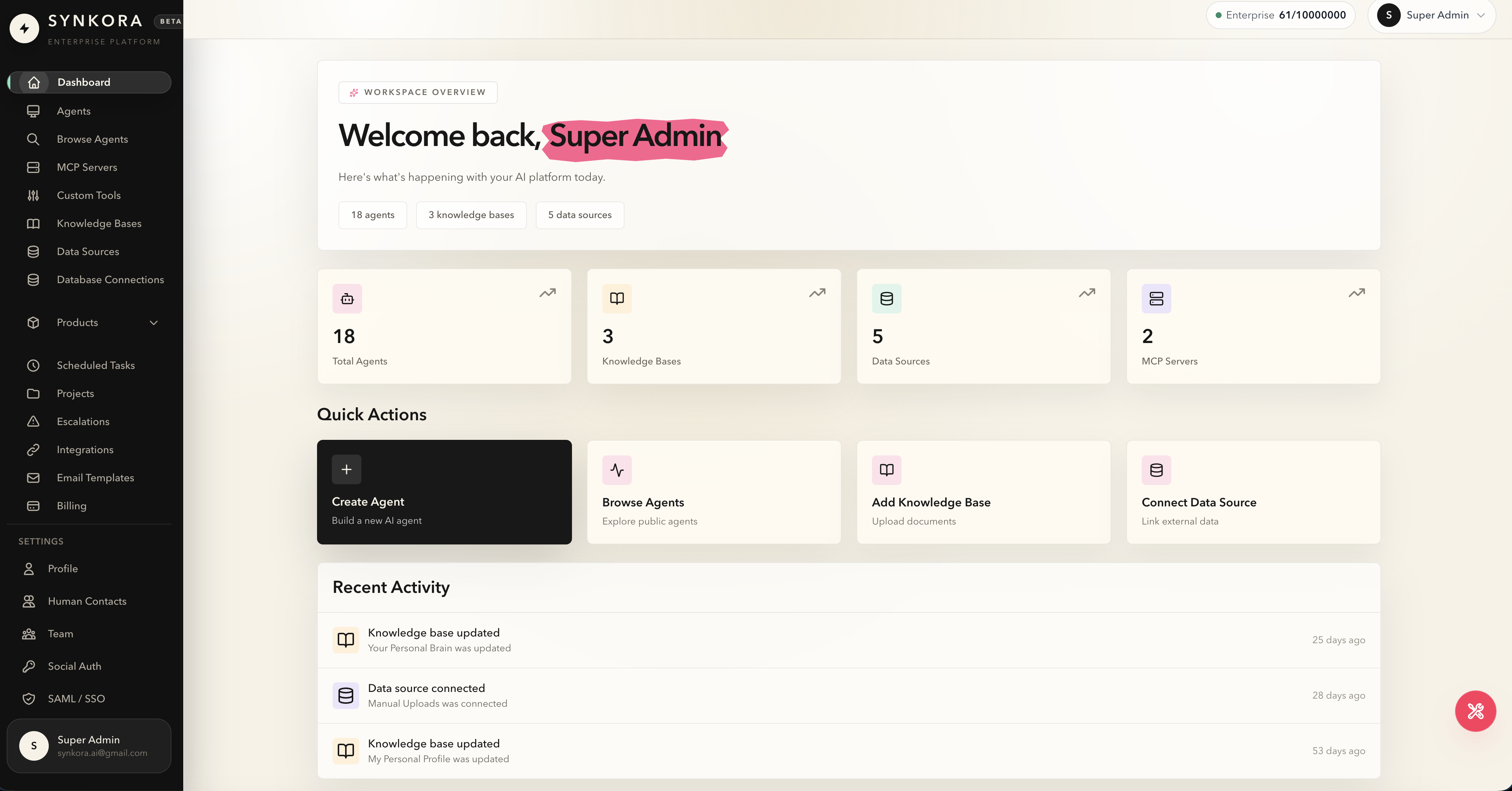
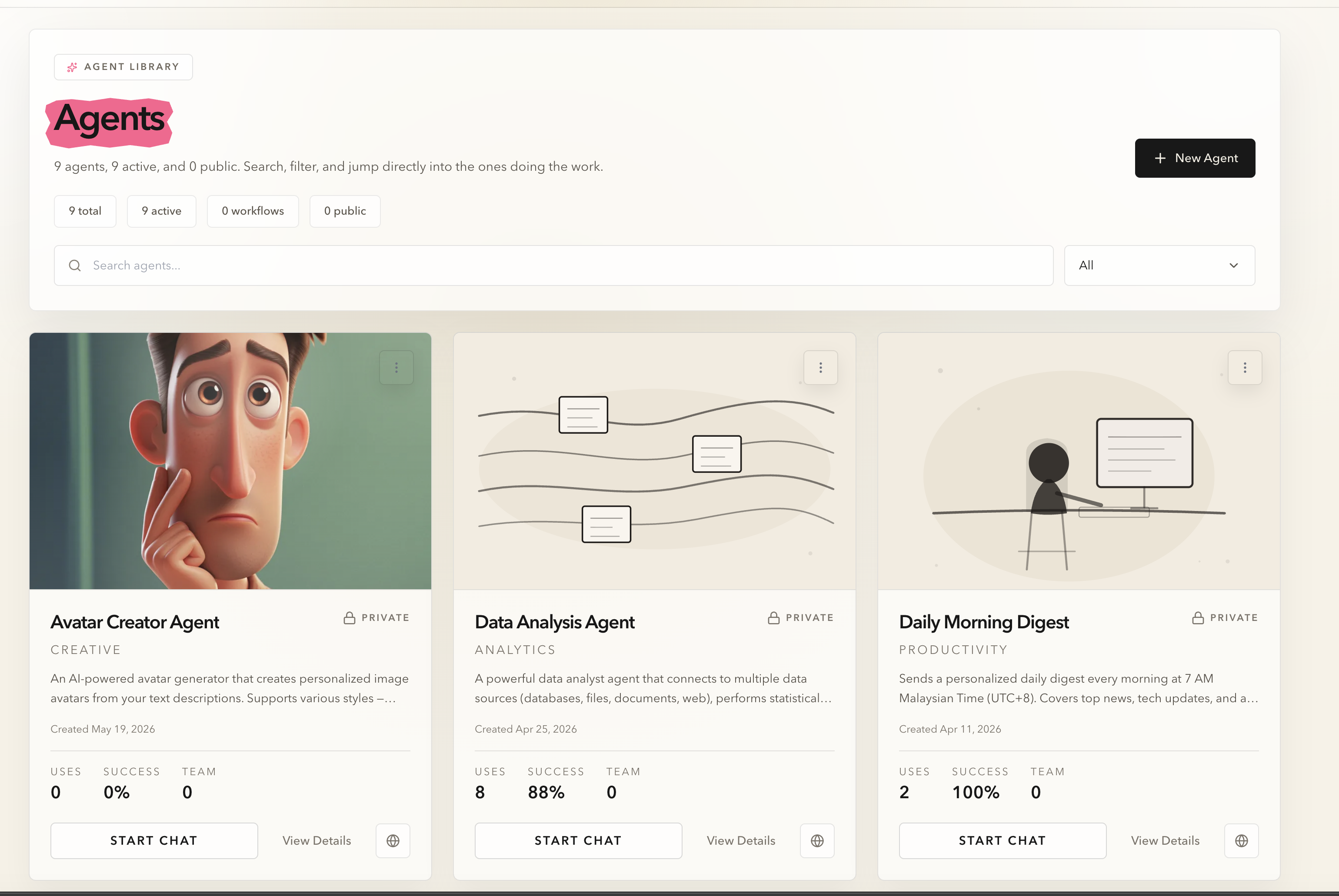
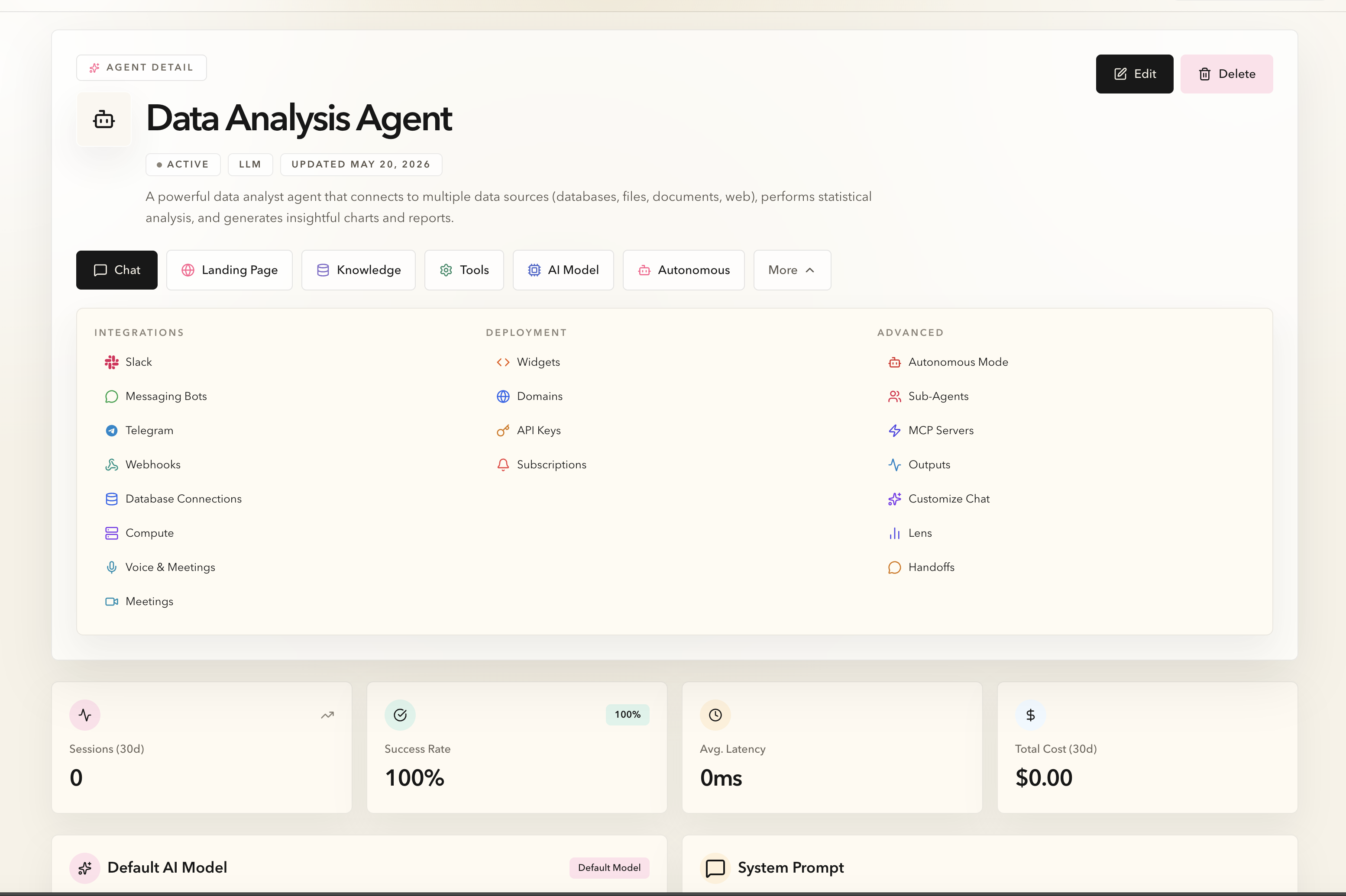
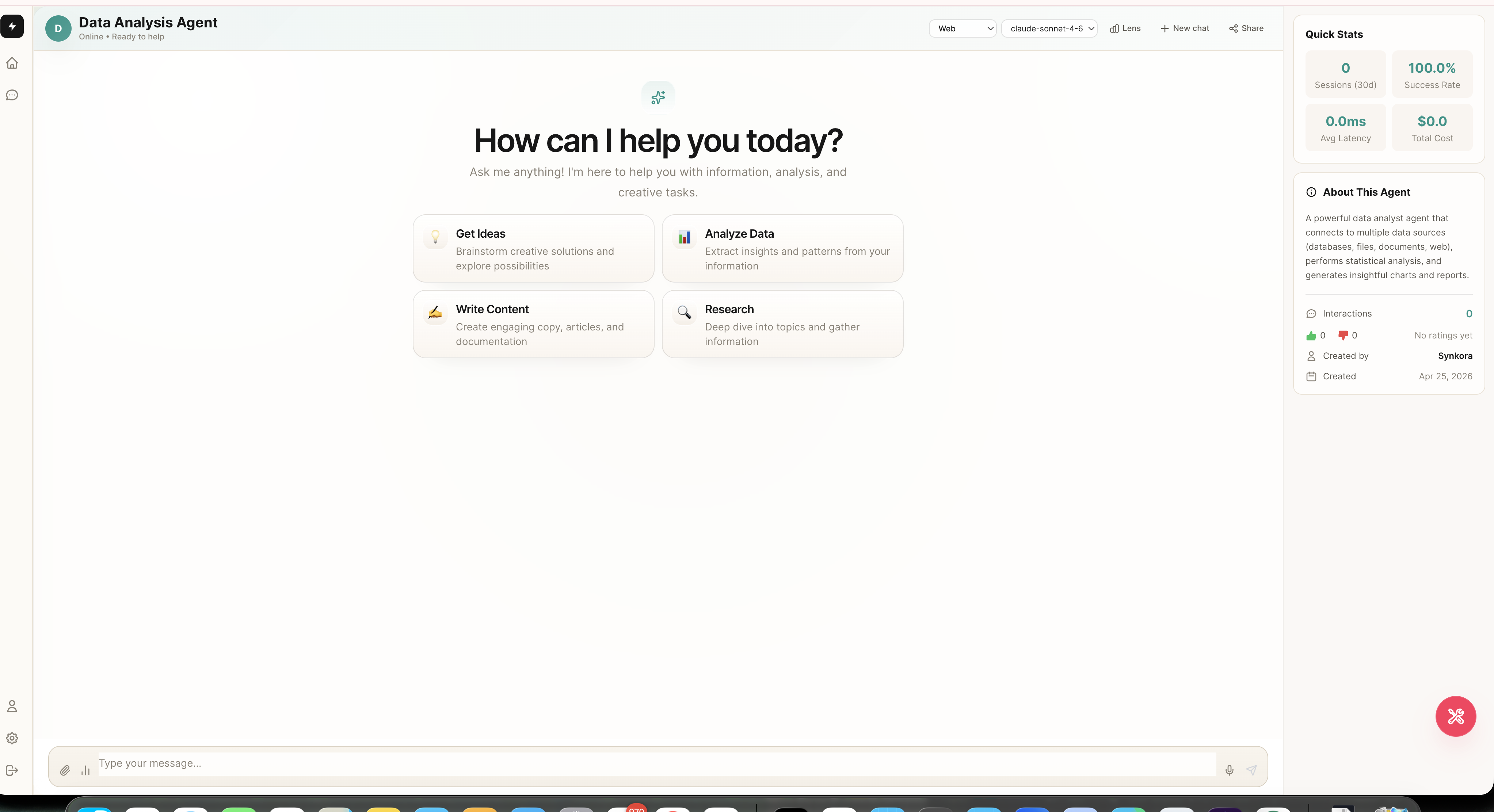
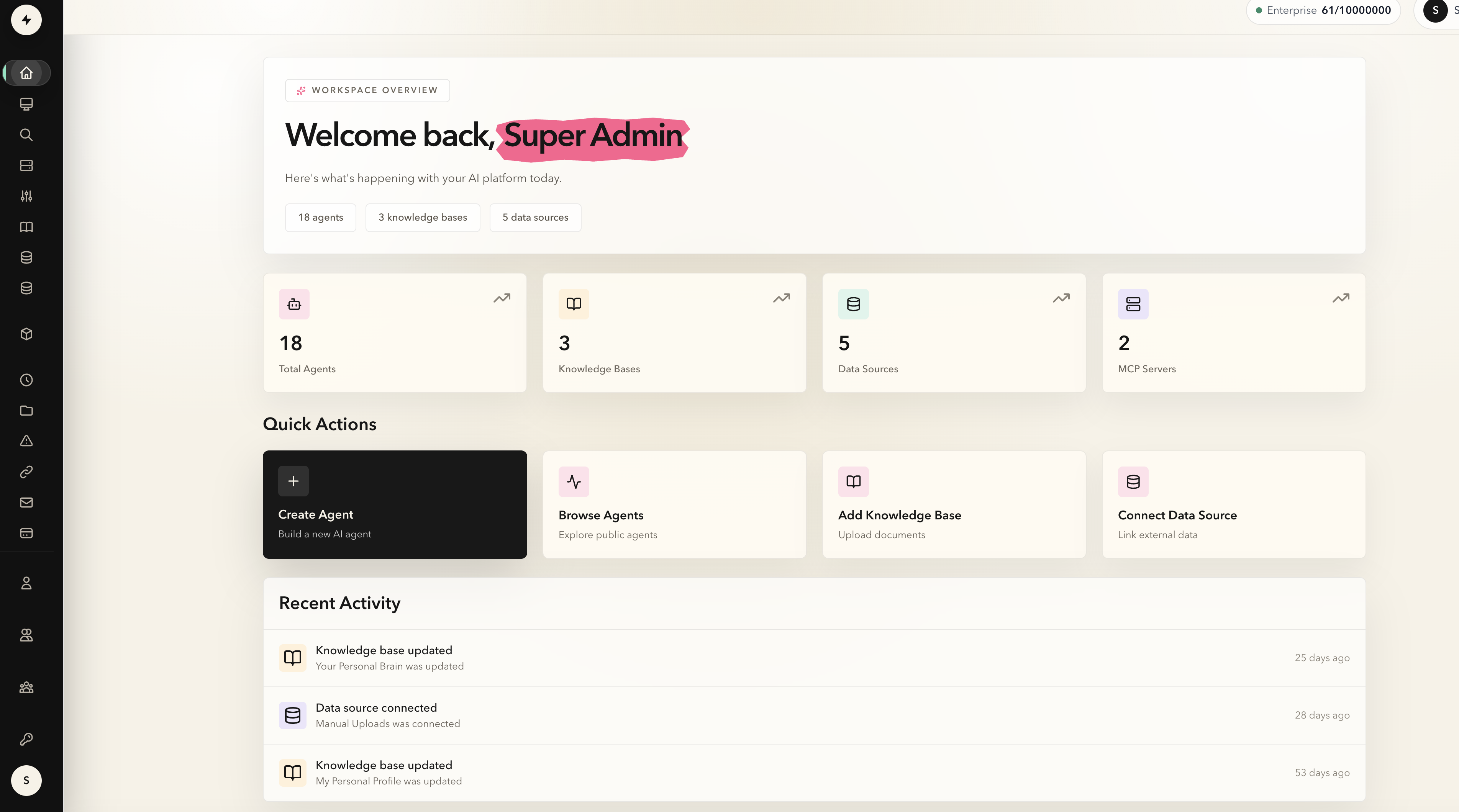
Synkora is a self-hosted AI agent platform that allows teams to build, deploy, and manage intelligent assistants without vendor lock-in or cloud dependency. The platform provides a web UI for creating agents, managing knowledge bases, and deploying them across multiple channels including Slack, WhatsApp, Teams, Telegram, and REST API.
Core capabilities include multi-provider LLM support via LiteLLM, vector-based RAG with Qdrant, Pinecone, or Elasticsearch, custom tool integrations (50+ pre-built), real-time WebSocket chat interfaces, MCP server integration, voice services through ElevenLabs, and comprehensive observability through Langfuse.
The architecture is designed for scalability: a FastAPI backend handles API requests and websockets, while Celery workers handle scheduled tasks like billing and cron jobs. A Redis instance manages pub/sub messaging between components. The frontend uses Next.js 15 with React 19 and Tailwind CSS for a responsive interface.
Multi-tenancy is built into the design from day one, supporting role-based access control, per-tenant isolation, API key management, quotas, and billing integration via Stripe. Each tenant has its own database connection pool, vector store instance, and model configuration.
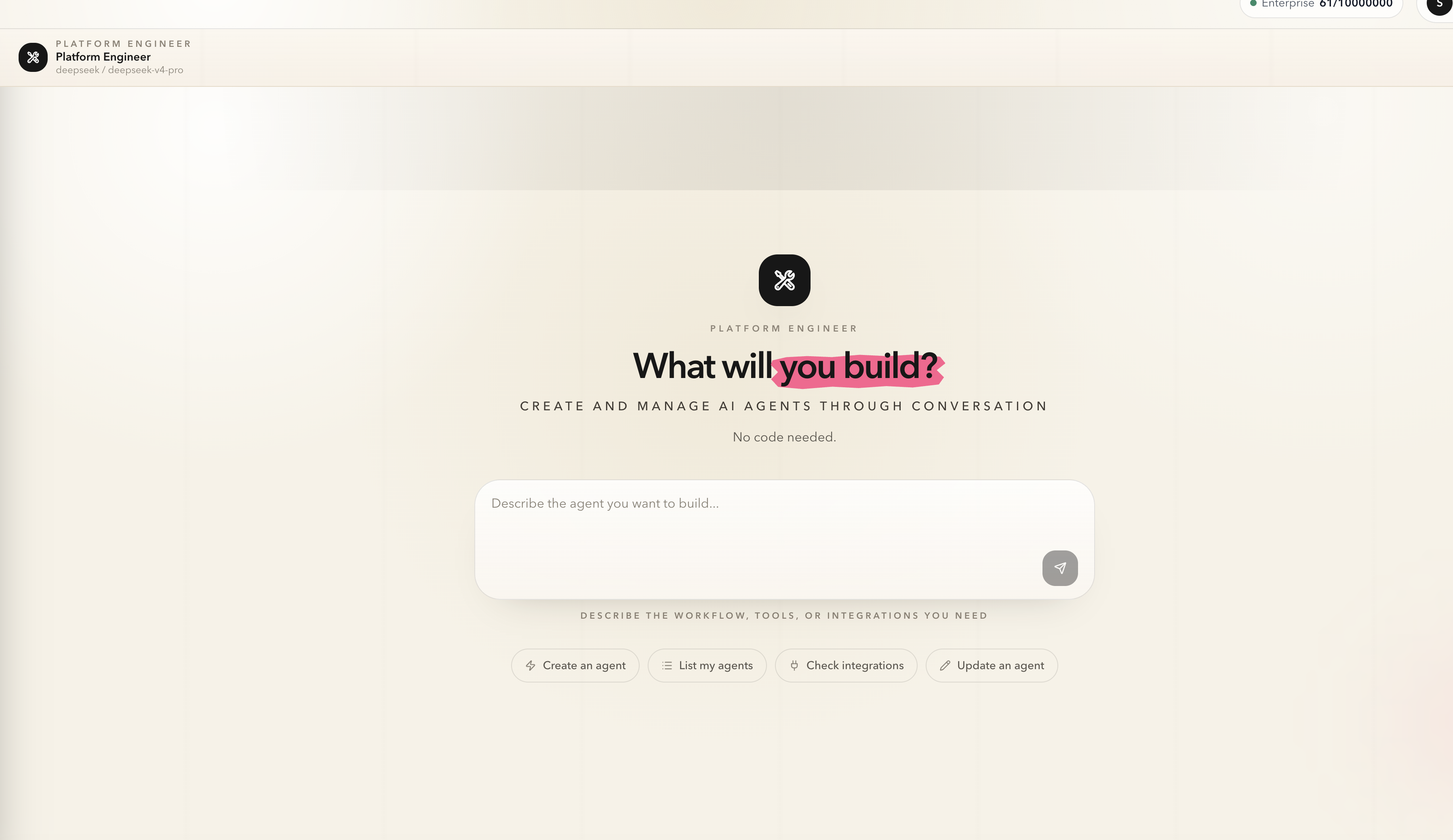
The platform also includes a Platform Engineer agent that can be configured through natural language conversation rather than forms or config files, making it accessible to non-developers while still offering full programmatic control for developers.
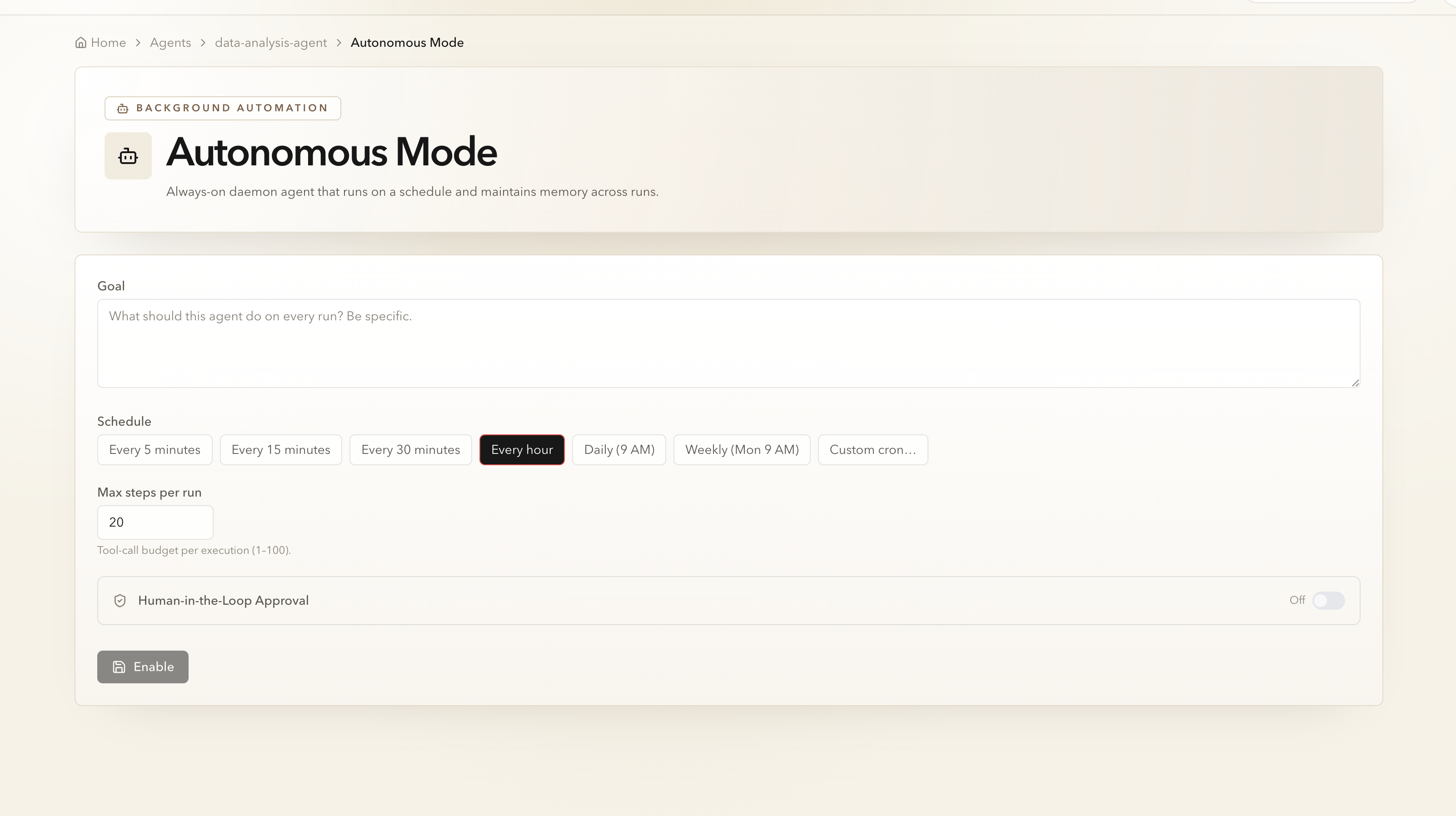
- Customer support automation with knowledge base retrieval and human-in-the-loop escalation
- Engineering assistants that review code, triage bugs, and generate documentation from GitHub/GitLab/Sentry data
- Marketing content creation and social media scheduling powered by LLMs and external tools
- Data analysis agents that perform natural language queries over databases and generate reports automatically
- Internal copilots for HR, finance, or operations teams connected to existing business tools via 50+ integrations
- Personal AI assistants with voice support, browser automation, and messaging platform integration
- Self-hosted on-premise deployment with MIT license — no vendor lock-in or phone-home requirements
- Multi-tenant architecture with complete isolation per tenant, including role-based access control and API key management
- 50+ pre-built tool integrations plus extensible custom tools via MCP server protocol
- Real-time WebSocket chat interface with streaming responses and inline LLM observability via Langfuse
- Multi-provider LLM support through LiteLLM, enabling seamless switching between OpenAI, Anthropic, Google, and others
- Built-in billing and subscription management with Stripe integration for per-tenant resource quotas
- Self-hosted deployment requires significant infrastructure setup including PostgreSQL, Redis, vector databases (Qdrant/Pinecone/Elasticsearch), and storage (MinIO/S3)
- Multi-tenant isolation is a design choice that may increase operational complexity compared to single-tenant deployments
- The platform targets teams with at least 2–5 agents; smaller teams may find the tooling overhead disproportionate
- Real-time chat requires WebSocket infrastructure and can introduce latency under high load
- Voice services through ElevenLabs are paid-only features, not included in the open-source version
Capturas del proyecto
Imágenes reales detectadas en la documentación del repositorio.
Perfil de infraestructura
Estimación inicial derivada del repositorio y de los servicios detectados.
Despliegue detectado
Qué señales reales de instalación hemos encontrado.
Deploy using Docker Compose for local development with PostgreSQL, Redis, Qdrant, MinIO, and Elasticsearch all running on a single machine.,For production, use Kubernetes with Helm charts to manage pods across multiple nodes. The FastAPI backend can be deployed horizontally with multiple replicas.,Configure custom domains in the API configuration (config.py) for each tenant's domain prefix.,Enable HTTPS/TLS termination at the load balancer level before reaching the application servers.,Set up monitoring and alerting on Redis connectivity, PostgreSQL connection pool exhaustion, and Celery worker health.,For multi-tenant environments, ensure proper database connection pooling per tenant to prevent resource contention.,Use environment variables for sensitive data like API keys and Stripe secrets — never commit them to version control.
Stack y dependencias
Componentes inferidos a partir de manifests, configuración y documentación.
Puede sustituir a
Relaciones detectadas por el análisis del repositorio y su categoría.
Experiencia real de la comunidad
Ayuda a contrastar la estimación automática con instalaciones reales.
Todavía no hay datos comunitarios para este proyecto.