
storyOS
Open-source, self-hostable work OS — user-defined relational databases that can run an entire company.
Ficha actualizada 23 sept 2026, 12:05 · upstream 23 sept 2026, 12:03 · release sin release detectada
Qué es storyOS
Descripción editorial construida a partir del repositorio, su documentación y sus señales de mantenimiento.
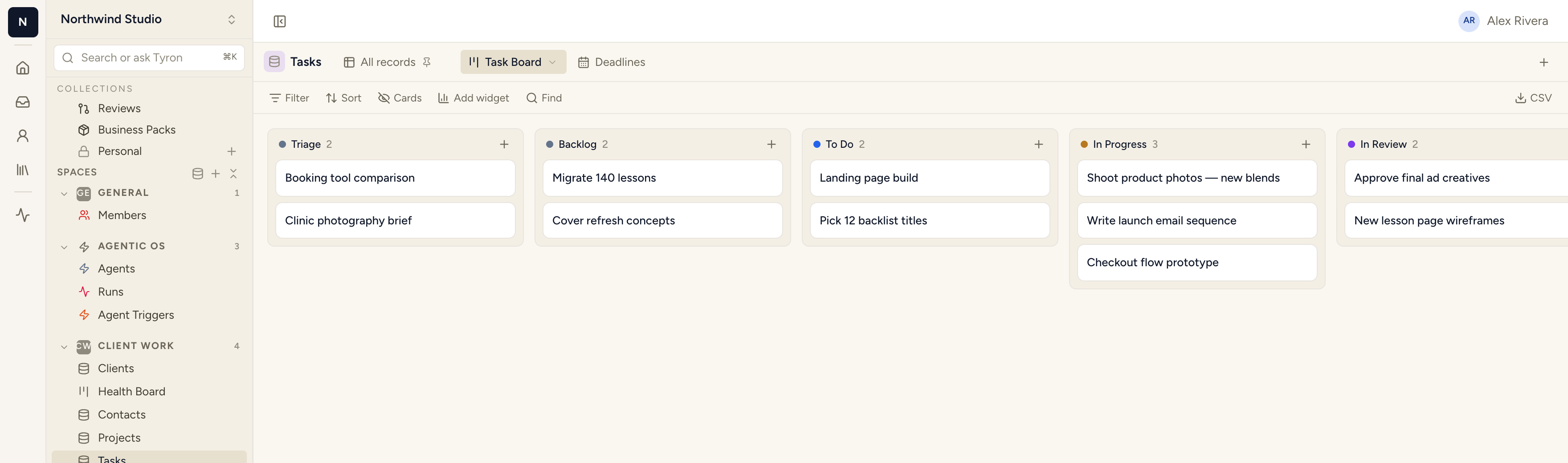
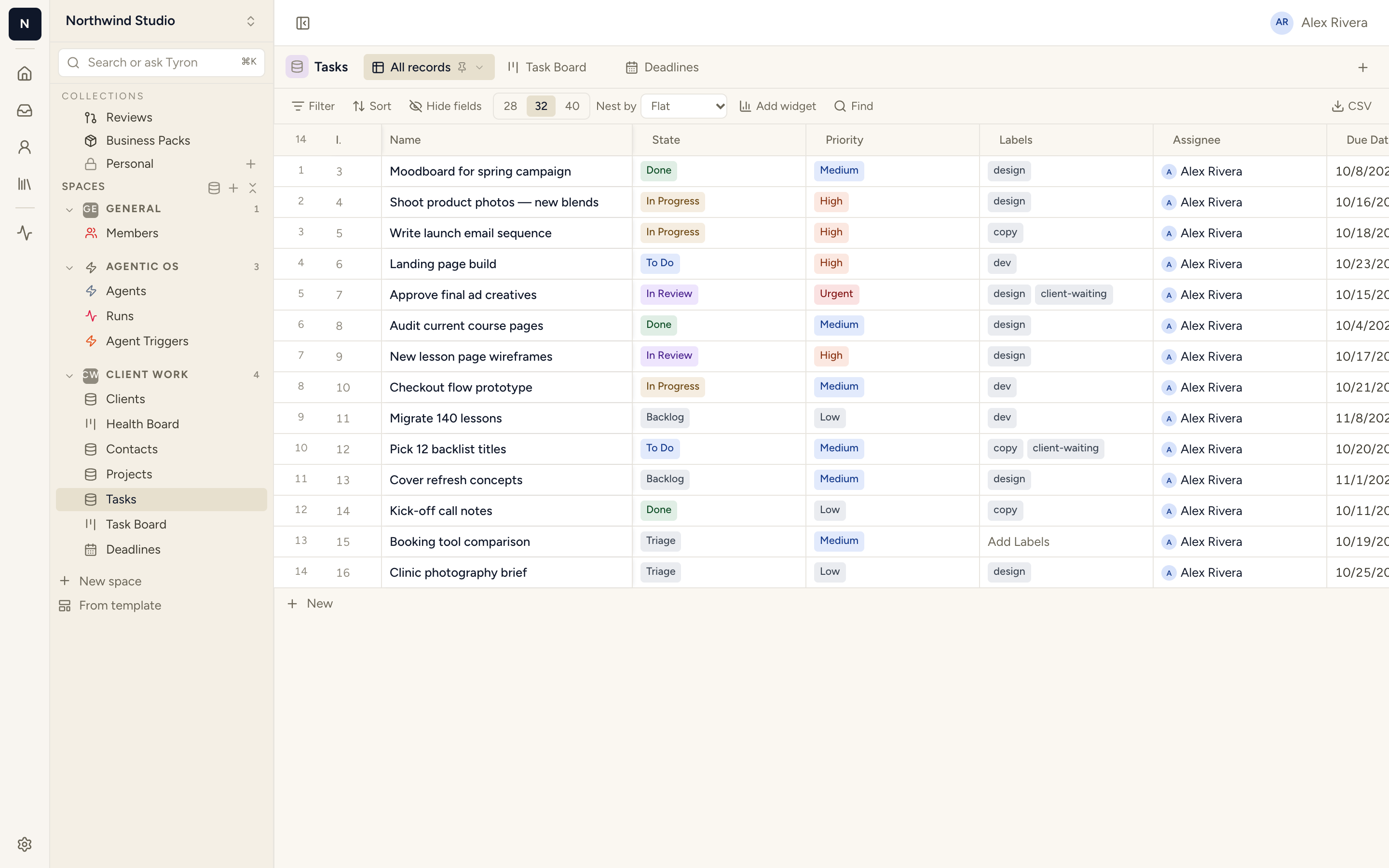
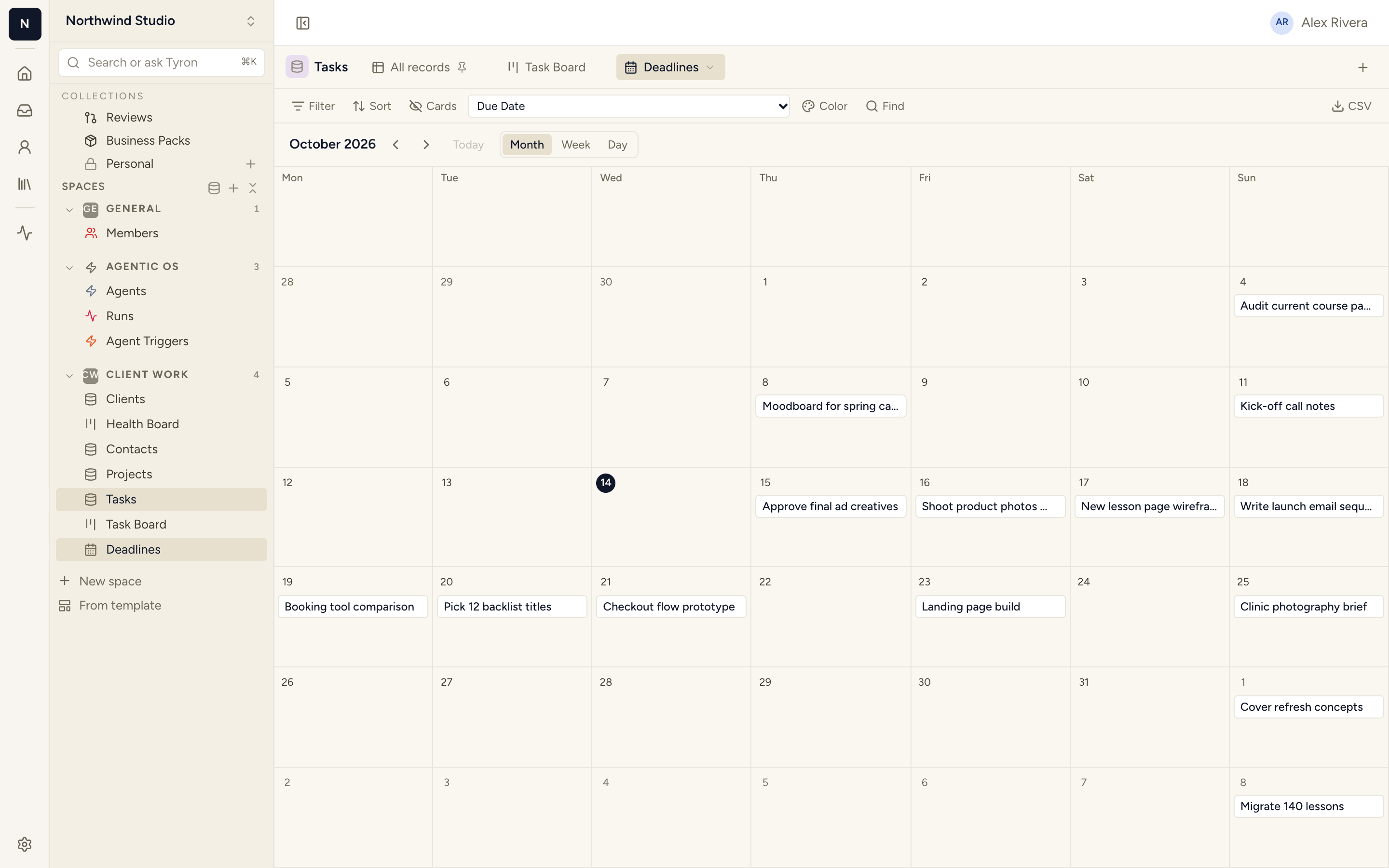
StoryOS is a connected-database work operating system, open source and API-first. You define your own relational databases and connect them with real relations between records. From tables to kanban boards, calendars, galleries, lists, feeds, and timelines — everything runs on the same engine. Nothing is paywalled; the self-hosted core is fully capable for any team size.
The web UI is simply the first client of a public REST API that exposes every record as an endpoint. A script (or an AI agent via MCP) can perform any operation supported by your schema, including creating, reading, updating, and deleting records across all connected databases. This means you can build custom workflows, automate tasks, or integrate with third-party tools without being locked into a vendor's product.
The platform treats structure as the primary unit of work: every record is stored in a database with stable IDs, relationships between them are first-class, and views (tables, kanban boards, calendars) are simply API endpoints that query those records. This design ensures predictability, scalability, and long-term maintainability — no document-based chaos or vendor lock-in.
- A small agency uses StoryOS to manage client projects in a relational database, with tasks linked to clients via foreign keys. The API allows them to create new project records, assign team members, set deadlines, and track progress across multiple databases (e.g., time tracking, billing).
- A software company runs StoryOS as its internal CRM, storing customer data alongside sales pipeline stages and follow-up tasks. They use the relational model to link opportunities to specific accounts, enabling accurate forecasting and automated email campaigns.
- A content production team uses StoryOS to manage editorial calendars, track draft revisions, and coordinate with editors via a shared database. The API allows them to create content items, assign deadlines, and generate reports on publication schedules.
- An agency uses StoryOS as their project management tool, storing client requirements in one relational table and breaking them down into tasks linked by dependencies. They use automated workflows to trigger notifications when milestones are due.
- A team of developers uses StoryOS to manage sprint planning, track bugs, and organize code repositories. Each developer has a personal workspace with their own database schema, while the platform-level tables handle shared infrastructure data like project status and deployment logs.
- An agency uses StoryOS as their internal communication tool, storing client communications in relational records linked by contact information. They use automated workflows to send reminders before deadlines and generate reports on response times.
- StoryOS is fully self-hosted with a single Docker Compose command that starts PostgreSQL and the API server.
- The platform uses an API-first architecture where every record is exposed as a REST endpoint, enabling custom integrations via scripts or MCP servers.
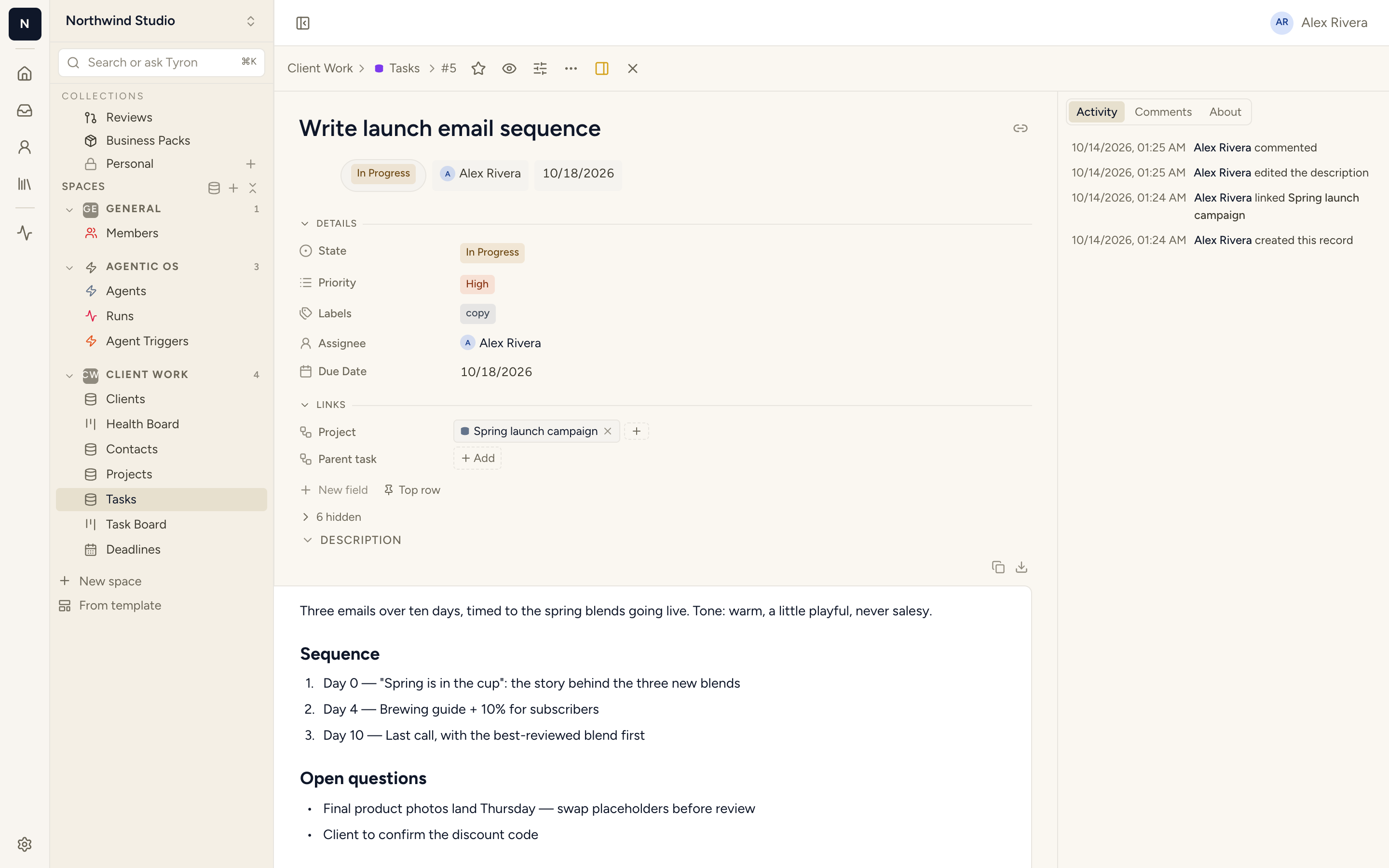
- Relations are first-class in StoryOS — records can be linked to other records across any number of databases with full referential integrity.
- Schema changes are runtime API calls rather than database migrations, allowing teams to evolve their data model without downtime.
- The platform supports 19 pre-built template packs for common work scenarios including client CRM, content pipelines, and social calendars.
- StoryOS uses PostgreSQL as its only datastore with Drizzle ORM, providing type safety through Zod schemas generated from the OpenAPI spec.
- The platform requires a minimum of 2 GB RAM to run comfortably on most hardware; smaller machines may experience performance degradation.
- While the core engine is free, future monetization plans include managed hosting and AI features that could increase costs for large teams.
- The API has rate limits (currently 100 requests per minute) which can impact performance under high load.
- Custom integrations require writing code to interact with the REST API endpoints, which may have a learning curve.
- The platform does not include native file storage or document management features — attachments are stored externally via S3/MinIO.
Capturas del proyecto
Imágenes reales detectadas en la documentación del repositorio.



Perfil de infraestructura
Estimación inicial derivada del repositorio y de los servicios detectados.
Despliegue detectado
Qué señales reales de instalación hemos encontrado.
To deploy StoryOS on self-hosted: clone the repository and run `docker compose up -d`. The API runs on port 3001, the web UI on 3000. Use environment variables for database credentials and secrets (e.g., `BETTER_AUTH_SECRET`). For production, use a managed PostgreSQL instance with SSL/TLS enabled and configure authentication via better-auth tokens rather than plaintext passwords. Backups should be scheduled daily using pg_dump or Docker volumes.
Stack y dependencias
Componentes inferidos a partir de manifests, configuración y documentación.
Puede sustituir a
Relaciones detectadas por el análisis del repositorio y su categoría.
Experiencia real de la comunidad
Ayuda a contrastar la estimación automática con instalaciones reales.
Todavía no hay datos comunitarios para este proyecto.